
Small Space Interior Design Tips & Ideas
Designing a small space is one of the biggest challenges—and opportunities—in interior design. With rising urban living and compact apartments, the demand for smart, functional, and stylish small space interiors has increased rapidly. A well-designed small space does not feel cramped; instead, it feels open, efficient, and comfortable.
In this blog, we share practical small space interior design tips used by professional designers and taught in skill-based institutes like Unnati School of Design, where students learn to convert limitations into creative solutions.
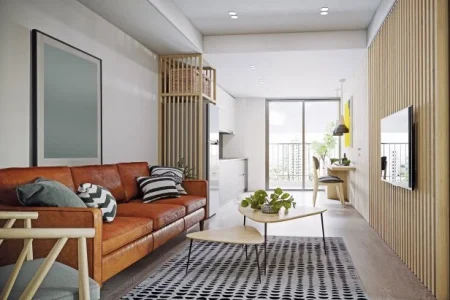
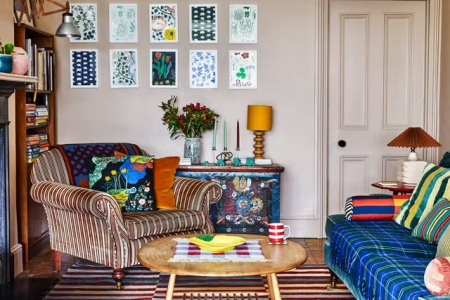
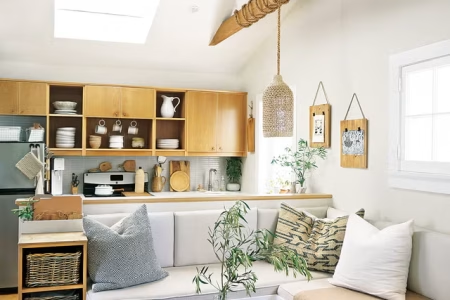
1️⃣ Start with Smart Space Planning
Good design always begins with space planning. In small interiors, every inch matters.
Before selecting furniture or colors:
Understand room dimensions
Identify movement paths
Decide clear functional zones
For example, in a compact living room, avoid blocking circulation with oversized sofas. Instead, plan furniture placement that allows smooth movement while maintaining comfort.
At Unnati School of Design, students are trained to plan layouts practically, ensuring small spaces remain usable and clutter-free.
2️⃣ Use Light Colors to Create Openness
Color plays a major role in how a space feels.
Best color choices for small spaces:
White
Beige
Light grey
Pastel shades
Light colors reflect more light, making rooms appear larger and brighter. You can add contrast through cushions, artwork, or accent furniture without overwhelming the space.
Professional interior designers often use neutral base palettes for small interiors and layer them with textures for depth.
3️⃣ Choose Multifunctional Furniture
In small interiors, furniture should serve more than one purpose.
Smart furniture ideas:
Sofa-cum-beds
Storage beds
Foldable dining tables
Wall-mounted desks
For example, a storage ottoman can work as seating, storage, and a coffee table. Furniture design knowledge is crucial here—this is why furniture design training is an important part of interior design education at Unnati School of Design.
4️⃣ Go Vertical: Use Wall Space Wisely
When floor space is limited, walls become extremely valuable.
Vertical design tips:
Wall-mounted shelves
Tall wardrobes up to ceiling
Hanging cabinets instead of floor units
Vertical storage keeps the floor open, making the room feel larger. Floor-to-ceiling wardrobes also reduce visual clutter and increase storage efficiency.
5️⃣ Maximize Natural and Artificial Lighting
Good lighting can completely transform a small space.
Lighting tips for compact interiors:
Use maximum natural light
Avoid heavy curtains
Add layered lighting (ambient + task lighting)
Wall lights, cove lighting, and pendant lights free up floor and table space while improving ambiance. Lighting design is a key topic covered in professional interior design courses.
6️⃣ Keep Furniture Proportionate to the Space
Oversized furniture is one of the biggest mistakes in small interiors.
Always choose:
Slim-profile sofas
Compact dining sets
Furniture with exposed legs
These elements create a sense of lightness and openness. Proper furniture proportion is something students learn through practical training and real projects at Unnati School of Design.
7️⃣ Use Mirrors to Create Illusion of Space
Mirrors are one of the most effective tools in small space design.
How mirrors help:
Reflect light
Visually double the space
Add depth to rooms
Placing a mirror opposite a window or in narrow corridors can dramatically improve the sense of space.
8️⃣ Avoid Clutter and Over-Decoration
Minimalism works best in small spaces.
Design discipline tips:
Limit décor items
Use closed storage
Maintain visual balance
Instead of many small décor pieces, use one strong focal element like a statement wall or artwork.
9️⃣ Use Sliding Doors and Compact Partitions
Traditional swing doors take up valuable space. Sliding doors and lightweight partitions are excellent alternatives.
Examples include:
Sliding wardrobe shutters
Glass partitions
Folding doors
These solutions are commonly used in modern compact homes and are taught as part of practical interior design training.
🔟 Think Function First, Style Second
A beautiful small space that doesn’t function well will always fail.
Always ask:
Is the space comfortable to use daily?
Is storage adequate?
Is movement easy?
Professional interior designers are trained to balance aesthetics with functionality, which is a core philosophy at Unnati School of Design.
Final Thoughts
Designing small spaces requires creativity, technical knowledge, and smart planning. With the right approach, even the smallest room can feel spacious, stylish, and comfortable.
Learning these techniques through professional interior design education helps students and designers confidently handle compact residential projects, which are increasingly common today.
If you want to master such practical skills, enrolling in a skill-based interior design institute like Unnati School of Design can help you build strong design fundamentals and real-world expertise.

